How to Plan Brand Activation for a Small Business in 8 Steps

Last Updated: 20 November 2026
Quick Summary
Brand activation is a live, hands-on way to get people to experience a brand in person. To plan one for a small business, set one clear goal and define success, identify your audience, write a one-page brief, set a realistic budget, choose a simple format, and track results to sales.
Pick one primary goal and one backup, rather than setting too many objectives at once.
Reuse a one-page brief template covering goal, audience, budget, guest actions and follow-up.
Compare quotes by full written breakdown, including travel, extra hours, VAT and photo usage rights.
Use a dedicated offer code and QR code so redemptions can be counted against the activation.
Judge the activation by cost per acquired customer against your usual acquisition cost, not headcount.
Table of Contents
Step 1: Set Clear Objectives and Define What Success Looks Like
Step 2: Identify Your Target Audience and Map the Customer Journey
Step 3: Write a Brand Activation Brief Template You Can Reuse
Step 5: Generate Brand Activation Ideas for Small Businesses
Booking Your First Activation With a Professional Photo Booth Partner
Brand activation is a live, hands-on way to get people to experience a brand in person. Plan brand activation for a small business well, and guests remember your name long after the event ends.
Most marketing talks at people. Brand activation lets people take part. A poster or social post asks for a glance. An activation asks for time, attention and a little fun.
Many small firms find that this kind of contact sticks better than an advert. Guests who pose with a branded backdrop or take home a printed keepsake carry your name with them.
Brand activation is not just a bigger version of advertising. The key differences are:
Live contact: People meet the brand face to face or in a real setting.
Two-way interaction: Guests join in, rather than just watch.
Shareable results: Photos and clips often travel further than the event itself.
Measured by response: Success is judged by who took part and what they did next, not just by views.
A common mistake is treating an activation as a one-off party. A good activation has a clear purpose and a plan for what happens afterwards. Without that, the energy fades the moment the event ends.
The steps below take you from first goals to booking your first activation. Each one is short, practical and built for a small team with a limited budget.
Step 1: Set Clear Objectives and Define What Success Looks Like
Start by deciding what the activation must achieve. Vague goals like "raise awareness" make it hard to plan or judge results.
Pick one main goal:
Meet new customers in your local area
Grow your email list or social following
Thank existing customers
Build awareness among a new group of people
Then decide how you will know it worked. Simple measures work well for small businesses:
Number of guests who took part
Number of email sign-ups or social follows
Enquiries or sales in the two weeks after the event
Watch out: Setting too many goals at once spreads your effort thin. Choose one primary goal and one backup.
Step 2: Identify Your Target Audience and Map the Customer Journey
Know exactly who you want to reach. A guest list of "everyone nearby" is hard to plan for. A clear group, such as local parents, office teams or wedding guests, makes choices easier.
For your audience, note:
Their age range and where they spend time
What they care about and what problem you solve for them
Where they already meet your brand, if anywhere
Next, map what happens from first contact to follow-up:
Arrival: How do guests hear about the event and find it?
Entry: What makes them want to join in?
Experience: What do they do, and how long does it take?
Take-home: What do they keep, such as a print or a digital gallery?
Follow-up: How do you stay in touch?
Step 3: Write a Brand Activation Brief Template You Can Reuse
A short brief keeps everyone aligned. Reuse it for every activation so planning gets faster each time.
Use this template:
Activation name: Main goal: Target audience: Date, time and venue: Budget: What guests will do: What guests take away: Success measures: Follow-up plan: Owner and team:
Keep the brief to one page. If a field is hard to fill, that usually means the plan needs more thought.
Step 4: Set a Realistic Brand Activation Budget
Many activation guides assume an agency budget.
Start with a total figure you can spend without borrowing, then split it into four buckets.
These are starting proportions, not rules. The point is to decide the split before you request quotes, so a single expensive item cannot swallow the whole budget.
Low-cost formats that still feel like an activation:
A branded photo backdrop and props at an existing community event, where the pitch fee is low or waived for local businesses
A sampling table at a farmers' market or independent retailer, sharing a pitch with a complementary business
A short pop-up workshop in a hired room or a partner's premises, with the cost limited to materials and refreshments
A sponsored element at a school fair or charity day, where the contribution is often a fixed, modest sum
What to check in every quote:
What is included, setup, attendant, props, prints, digital gallery, delivery
Travel charges and out-of-hours or extra-hour rates
Whether you can use the photos and footage afterwards, and for how long
The cancellation and date-change terms
Whether VAT is included or added on top
Ask for a written breakdown rather than a single figure. A quote that separates equipment, staff and delivery is easier to compare and harder to inflate later.
Keep a simple spreadsheet with quoted, committed and actual columns so you can see where the money went and reuse the figures next time.
Watch out: The cheapest quote is rarely the cheapest activation. A low headline price with travel, attendant and print charges added later often costs more than a clear all-in quote, so compare the full breakdown, not the first number.
The table below sets out what to check in every quote, so you can compare like with like.
Quote item | What to look for | Watch out for |
What is included | Setup, attendant, props, prints, digital gallery, delivery | Items missing from the headline price |
Travel and extra hours | Written travel and out-of-hours rates | Charges added after booking |
Photo and footage use | Whether you can use the photos afterwards, and for how long | Limits on reuse |
Cancellation and changes | Terms for cancelling or moving the date | Non-refundable deposits |
VAT | Whether VAT is included or added on top | Extra tax added at invoice |
Cost breakdown | Equipment, staff and delivery shown separately | A single lump sum with no detail |
Step 5: Generate Brand Activation Ideas for Small Businesses
Good ideas are simple and easy to join. Guests should understand what to do within a few seconds. For photo-worthy styling, see these glam booth ideas with backdrops, props and finishing touches.

Some formats that suit small businesses:
Photo booth with branded props and backdrop: Guests get a keepsake with your logo on it.
Sampling stand: A product tasting or trial at a local market.
Community event sponsorship: Support a local fair, school event or charity day.
Pop-up workshop: Teach a short skill linked to what you sell.
Keep the entry point obvious. A clear sign, a friendly greeting and a reason to stop are enough.
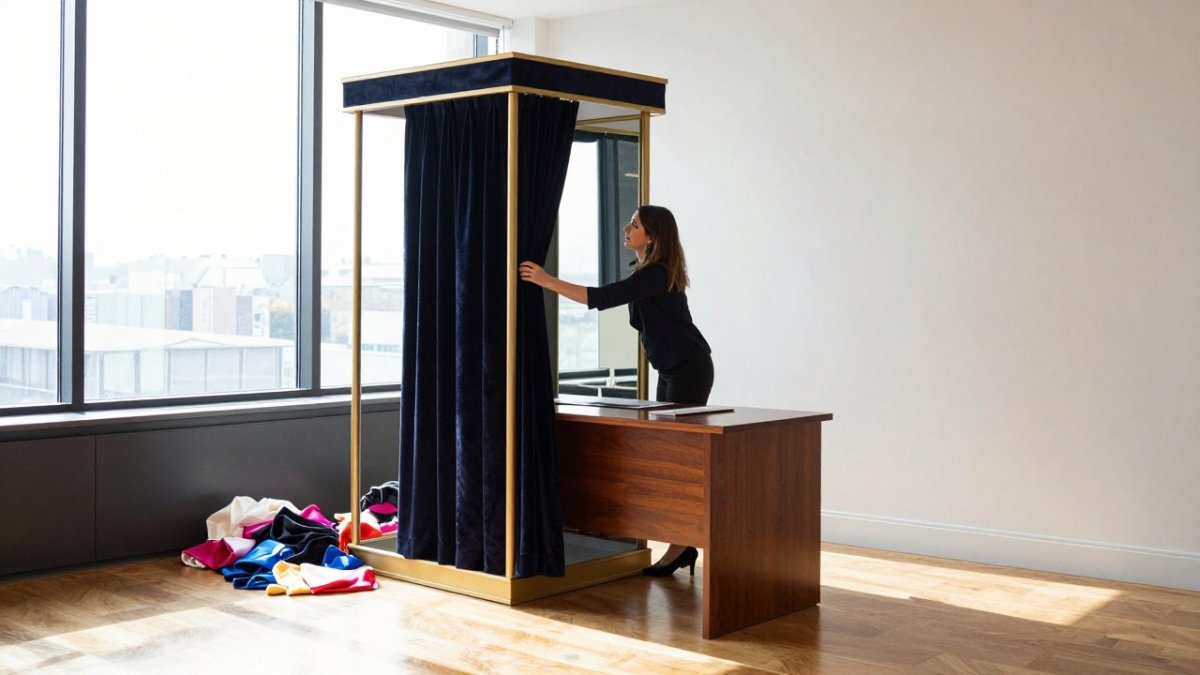
A small business owner and two team members can set up a branded photo booth at a local community event in minutes, ready for guests to pose in front of the backdrop. Plan the layout so people can queue without blocking the path.
Step 6: Measure Your Campaign and Connect Activity to Sales
Engagement numbers are easy to collect and easy to overvalue. A small business needs to know whether the activation produced customers, not just whether it was busy. A mosaic guestbook comparison shows how a photo wall can keep guests involved and the brand visible long after the event.
Set up simple attribution before the event:
A dedicated offer code printed on keepsakes, flyers or receipts, redeemable in store or online, so redemptions can be counted against the activation
A QR code on the backdrop, props or print wallet that leads to a landing page with a sign-up form or a booking enquiry form
A separate email list or tag for people who signed up at the event, so you can see how that group behaves over the following weeks
A single question at the point of sale, "How did you hear about us?", with the activation listed as an option
Keep the tracking light. One offer code and one sign-up route are enough for a first activation; adding more just creates work you will not maintain.
What to record on the day:
Number of guests who took part
Number of sign-ups, follows or enquiries
Number of offer codes handed out
Any sales made at the event itself
What to record afterwards:
Offer code redemptions in the four weeks following the event
Enquiries that came through the QR landing page
Conversion of those enquiries into paying customers
Revenue attributed to the activation, compared with its total cost
A simple sheet with these columns is enough. The comparison that matters is cost per acquired customer against your usual cost per acquisition, if the activation brought in customers more cheaply than your normal channels, it earned a repeat; if not, adjust the format or the offer.
Turn interactions into lasting relationships:
Send a follow-up email within a few days, only to those who gave consent, with the photos or a thank-you offer
Segment event sign-ups so future messages are relevant to what they experienced
Invite attendees to a follow-up event or a loyalty scheme, giving them a reason to return
Review the list after four weeks to see how many became repeat customers
Watch out: Judging an activation on headcount alone hides the real result. A busy event with no tracked offer, no sign-up route and no follow-up produces a folder of photos and no measurable return, which makes it hard to justify repeating or scaling.
Booking Your First Activation With a Professional Photo Booth Partner
When you are ready to book, a professional partner can take much of the work off your plate. Fells Fun Booth provides photo booth hire for corporate events, weddings and private parties across the West Midlands, with a dedicated attendant at every event. Visit the Fells Fun Booth site to view booth hire options and check availability for your venue.
If you are still choosing a format, read plan photo booth hire Birmingham weddings with style to compare booth looks, guest experience and timing. For matching a booth style to your space and audience, see which booth suits your venue and celebration.
Bring your brief from Step 3 to the first conversation. Share your goal, guest numbers and date, and ask for a written quote. Clear answers at this stage make the day run smoothly. You can also view booth hire options and availability for your venue before you get in touch.
Frequently Asked Questions
What is a brand activation?
A brand activation is a planned event or experience that lets people interact with your brand in person or through a live digital moment, rather than just seeing an advert. Examples include pop-up stands, sampling days, photo booths with branded backdrops and corporate team events. For a small business, the aim is usually to build awareness, create memorable contact with customers and capture details or content that can be followed up after the event.
How much does a brand activation cost?
Costs vary widely depending on the format, venue, number of guests, staffing and how much branded material you need. Pricing for any specific service depends on quantity, dates and delivery. For current prices or a tailored quote for a photo booth or other activation, contact Fells Fun Booth directly through the website. Set your budget first, then choose the format that fits within it.
How far in advance should you plan a brand activation?
Allow enough time to agree your objectives, secure a venue or booking, design any printed or digital materials and arrange staffing. For a small event, starting several weeks ahead is usually sensible, while larger or venue-based activations need longer. Booking your entertainment or equipment early also gives you the best chance of your preferred date and set-up time.
How do you measure the success of a brand activation?
Choose two or three measures before the event, such as number of attendees, email or social sign-ups, content shared, or enquiries and sales in the weeks afterwards. Use a simple tracking method like a QR code, unique discount code or short follow-up survey to link activity to outcomes. Compare these results with your objectives to decide what to repeat next time.
Comments