How to Measure Brand Activation ROI Explained
Last Updated: October 24, 2026
Quick Summary
To calculate brand activation ROI, subtract total activation cost from attributed revenue, divide by total activation cost, then multiply by 100 for a percentage. Include every cost, from booth hire and branded print to staff time and follow-up marketing, and only count revenue you can genuinely trace to the activation.
Track outcome metrics such as leads and redemptions, and report them before output metrics like footfall.
A £2,000 activation returning £6,000 of tracked revenue delivers a 200% return.
Use unique codes, a dedicated landing page and tagged opt-in capture to attribute sales.
Set up your measurement tools in the week before the event, never afterwards.
Under UK GDPR, you need a lawful basis and a clear opt-in before emailing attendees.
Table of Contents
Start With the Right Brand Activation Metrics
Measuring brand activation ROI explained simply comes down to one idea: track what the event produced, not just what it looked like. A busy booth feels like success. It isn't proof of success. At Fells Fun Booth, we've watched plenty of organisers count queue length and call it a win, then struggle to justify the spend to a finance director. The fix starts with separating two very different numbers.
Output Metrics vs Outcome Metrics
Output metrics record what happened at the event: footfall, dwell time, photos taken, props used, prize entries collected. They are easy to count and easy to overvalue.
Outcome metrics record what changed afterwards: leads captured, email sign-ups, discount codes redeemed, enquiries traced back to the event, repeat bookings.
Outputs tell you the booth was busy. Outcomes tell you whether the budget earned its place. Track both, but report outcomes first when you present results. A common mistake is building a dashboard full of outputs because they look impressive, then having nothing to say when someone asks what the event actually delivered.
Footfall: how many people approached the booth
Dwell time: average minutes spent per guest
Capture rate: guests who shared an email or opted in
Redemption rate: codes or links used after the event
Cost per lead: total spend divided by qualified leads

Refining these metrics ensures that every pound spent on live engagement contributes directly to the broader objective of
as you plan your upcoming campaigns.
The Brand Activation ROI Formula That Works
The brand activation ROI formula is straightforward: subtract total activation cost from attributed revenue, divide by total activation cost, then multiply by 100 to get a percentage. That's the whole calculation. The difficulty sits entirely in the "attributed revenue" part, which we'll cover next.
Total activation cost should include everything, not just the hire fee:
Booth or activation hire
Branded print design and props
Staff time to plan and run it
Venue costs or space allocation
Follow-up marketing after the event
Working Through a Photo Booth Activation Example
Say a business books a branded booth for a corporate event and spends £2,000 all in, including design, staff time and follow-up emails. Over the next quarter, those captured leads convert into £6,000 of tracked revenue.
£6,000 minus £2,000 equals £4,000. Divide by £2,000, multiply by 100: that's a 200% return.
The maths is easy. The honesty is harder. Only count revenue you can genuinely trace to the activation. Inflated attribution makes the formula meaningless, and finance teams spot it quickly. If you're weighing up whether a booth is worth the spend in the first place, it helps to read is photo booth worth wedding spend before you build the numbers.
The formula is simple, but the cost side needs to be complete before the numbers mean anything.
Cost item | Included in total activation cost |
Booth or activation hire | Yes |
Branded print design and props | Yes |
Staff time to plan and run it | Yes |
Venue costs or space allocation | Yes |
Follow-up marketing after the event | Yes |
How to Attribute Sales and Leads to an Activation
Attribution is the part most guides skip. It's also where brand activation ROI lives or dies. Without a clear line from the event to the sale, you're guessing.
Use at least two of these methods together:
Unique codes: a discount code printed on the booth keepsake, tracked at checkout
Dedicated landing page: a short URL or QR code shown on the prints
Opt-in capture: email or SMS consent collected at the booth, tagged by event
Ask the question: add "how did you hear about us?" to your booking form and watch the event name appear
Time-window comparison: compare enquiry volume in the two weeks after the event against a normal fortnight
Watch out: collecting data without consent is a compliance risk. Under UK GDPR, you need a lawful basis and a clear opt-in before you email attendees. A tick box on the capture form solves this. Skipping it doesn't just risk a fine, it poisons your whole lead list.
Timing matters too. If the booth opens too late, guests leave before they engage, and your capture rate collapses. Get the timing right by reading when should photo booth open before you finalise the run sheet.
Brand Activation Measurement Tools to Set Up Before the Event
Set your measurement tools up before the event, not after. Retrospective tracking always misses data you can't recover.
Here's a simple checklist to work through in the week before:
Create a unique discount code or landing page for the event
Set up a tagged opt-in form on the capture device
Brief staff on what to say when collecting details
Agree which metrics you'll report and to whom
Confirm how digital copies and galleries are delivered so you can track downloads and shares
Book a follow-up email slot for 48 hours after the event
Note your baseline enquiry rate for comparison
Knowing how guests receive their digital copies matters for tracking shares and downloads. You can see how that delivery works by visiting view your event gallery to understand the format guests receive.
Brand Activation Campaign Examples Worth Copying
The best campaigns share one trait: they capture something useful while guests are having fun. Here are patterns worth borrowing, described generically because the specifics depend on your brand.
The lead-capture booth. Guests receive a branded print in exchange for an email opt-in. Simple, effective, and easy to attribute.
The competitive leaderboard. A score-based game where the top scorers win a prize, with entry tied to a sign-up. Drives repeat visits and dwell time.
The social share loop. Prints carry a hashtag and a QR code, turning every guest into a distributor. Track reach through code scans rather than guesswork.
The data-collection quiz. A short on-screen quiz before the photo, feeding answers into your CRM. Slower per guest, richer per lead.
Each of these gives you a clean trail from event to outcome. That trail is what makes the numbers defensible.
Common Measurement Mistakes That Undermine Your Results
Most measurement failures come from three habits. Fix them and your reporting gets sharper immediately.
Counting outputs as outcomes. Photos taken is not the same as leads generated. Report the second, not the first.
Attributing everything to the event. If sales were already rising, the activation didn't cause all of it. Use a comparison window and be honest about the baseline.
Starting measurement after the event. No unique code, no tagged form, no baseline. You've lost the ability to attribute anything. Set it up beforehand, every time.
A fourth mistake is quieter: reporting once and never again. Follow-up matters. A single email 48 hours after the event often does more for redemption rates than anything you do on the day.
Planning a Photo Booth Activation With Measurable Results
A photo booth activation works as a measurement tool when you design it that way from the start. Decide your outcome metric first, then build the booth experience around capturing it. That single decision separates a fun addition from a genuine marketing asset.
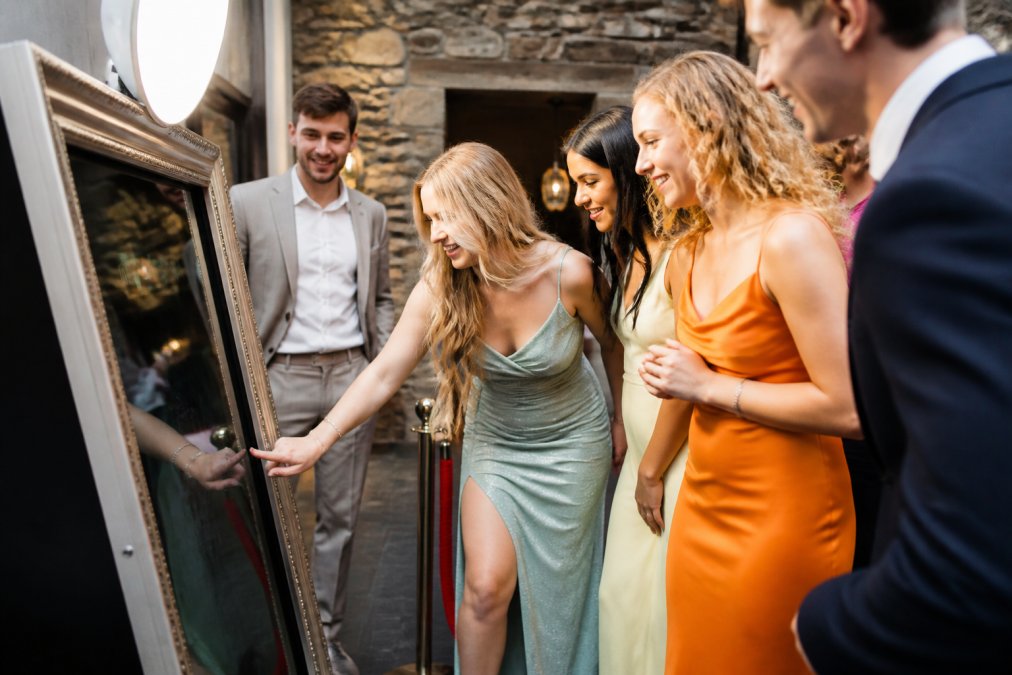
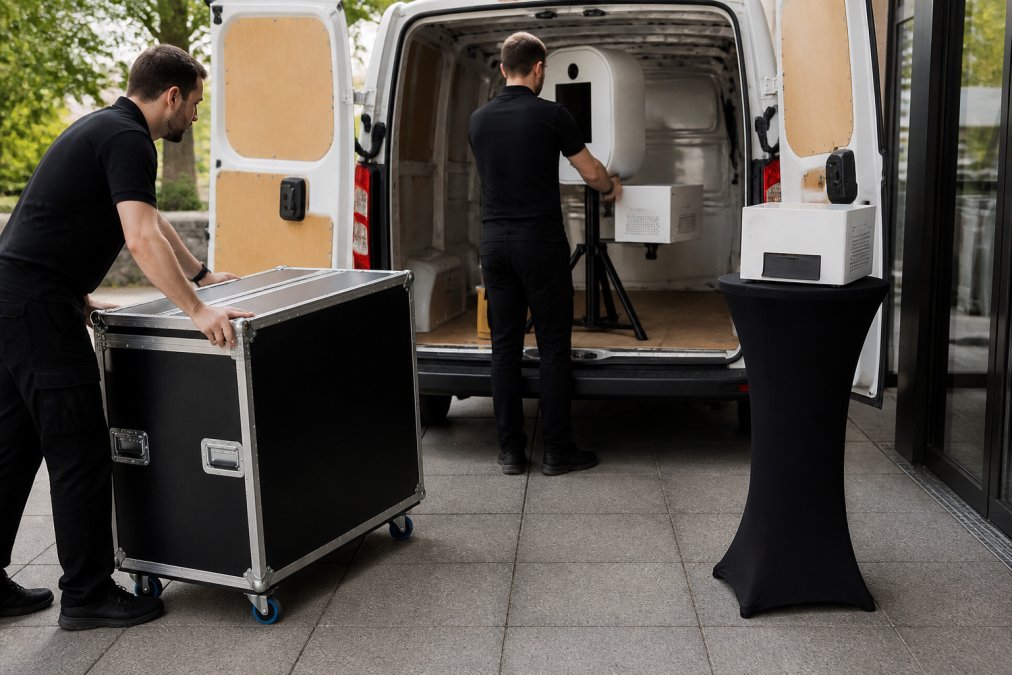
At Fells Fun Booth, we build branded booths with custom print designs, so every keepsake can carry your code, QR link or campaign message. Guests get instant high-resolution prints and GIFs, and every guest gets access to a full digital gallery. A dedicated booth attendant runs the setup and teardown, so your team is free to watch the numbers rather than manage the queue. We're trusted by over 500 events across the Midlands, with fully insured and PAT-tested equipment.
If you want the wider case for what a booth activation delivers before you pick your metrics, our guide on event photo booth benefits covers it. And when you're ready to plan the activation itself, photo mosaic wall hire explains how a mosaic wall builds buzz and gives you a striking, shareable centrepiece.
The hardest part of measuring brand activation ROI isn't the formula. It's setting up the capture points before the event so the numbers exist at all. Get that right and the reporting takes care of itself.
Fells Fun Booth can help you plan a branded activation that captures leads, tracks engagement and gives guests something worth keeping. With custom print designs, a full digital gallery for every guest, and a dedicated attendant at every event, we take the logistics off your plate. Get started with Fells Fun Booth and turn your next activation into measurable results.
Frequently Asked Questions
How do you measure brand activation ROI?
Start by adding up every cost: venue space, staff, equipment hire, printing, data capture and follow-up. Then total the value you can trace back to the activation, such as leads captured, sales closed within a set window and the cost of reaching the same audience through paid media. Divide the value by the cost and multiply by 100 to get a percentage. Brand activation ROI works best when you agree the formula and the attribution window before the event, not after.
What is the difference between brand activation ROI and event ROI?
Event ROI usually measures whether a single event paid for itself, often through ticket sales or direct revenue. Brand activation ROI looks wider: it weighs the cost of the activity against brand recall, data captured, social reach and sales influenced over a longer period. A photo booth at a corporate event, for example, might generate hundreds of email sign-ups and shared images, and those outcomes count towards brand activation ROI even when no product was sold on the day.
Which brand activation measurement tools should I use?
Keep it simple and set tools up before the event. A unique QR code or short link per activation lets you track scans and sign-ups in a spreadsheet or CRM. A dedicated landing page with UTM tags shows traffic and conversions in analytics. For on-site capture, a photo booth with a digital gallery gives you a record of guest engagement and shareable content. Match each tool to one metric so you are not collecting data you never analyse.
How can you measure brand awareness after an activation?
Use proxies you can actually collect. Count social posts and shares tagged to your campaign, track hashtag use and gallery downloads, and run a short prompted recall survey with attendees a few weeks later. Compare search volume for your brand name before and after the activation. None of these proves awareness on its own, but together they show whether the activation shifted attention, which is what brand activation metrics are for.
Comments